If your music or movie dialogue sounds a little off lately, dust might be to blame. You may clean your screens and keyboards regularly, but your speakers? They’re often overlooked. And that tiny mistake could be ruining their sound—and shortening their life.
Why dirty speakers can sound worse
A little dust won’t kill your audio, but over time, dust, pet hair, or kitchen grease can build up on key components like speaker grilles, cones, and drivers. That buildup acts like a blanket—muffling high notes, dulling mids, and even weakening bass.
Worse, that grime can creep into binding posts and connectors, causing crackling, dropouts, or unstable sound. It’s not just about looks—it’s about keeping your system sounding sharp.
What you need before you clean
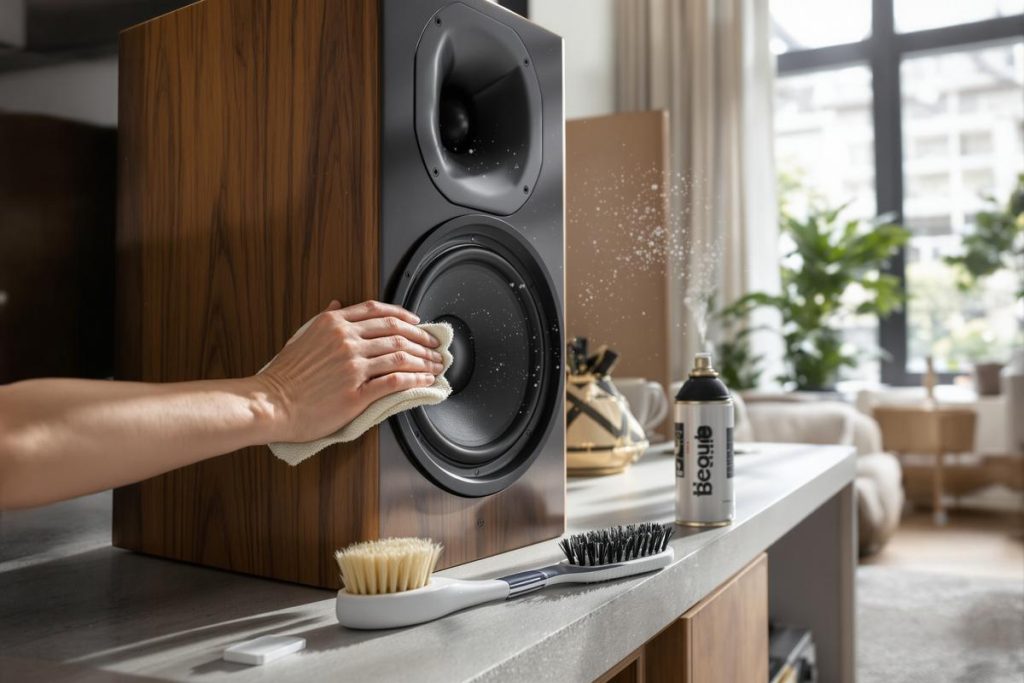
Don’t just grab any cleaning supplies. Speaker components are delicate, and using the wrong tools could do more harm than good. Here’s what you’ll need:
- Microfiber cloths (at least two—one wet, one dry)
- Soft-bristled brush (keyboards or makeup brushes work well)
- Compressed air can for blowing out light dust
- Wood-safe cleaner if your speaker cabinets are wood
- Lint roller for fabric grilles
- Deoxit contact cleaner for your connectors
Avoid any chemical cleaners with ammonia or alcohol. And forget paper towels—they’re too rough. Spray cleaners only onto cloths, not on the equipment itself.
How to clean speaker cabinets
This part is simple but makes a huge difference in presentation. Use this method for light dust and general upkeep:
- Dampen one microfiber cloth with water or a wood-safe cleaner.
- Wipe along the grain of the wood gently.
- Follow up immediately with a dry microfiber cloth to prevent streaking.
- While you’re there, spray a little contact cleaner on binding posts to improve signal clarity.
Cleaning speaker drivers the right way
Drivers are what actually move the sound, so handle them with care. Materials range from paper and plastic to metal and Kevlar, and not all can stand up to the same treatment.
Woofers and mid-range drivers
- For delicate paper cones, avoid moisture. Gently brush off dust and use compressed air.
- Sturdier materials like plastic or wood are fine to clean with a damp cloth followed by drying.
- If there’s a paper center cone, stick to a brush and air only—never press or tap it.
- Foam or rubber edges? You can lightly wipe with a rubber-safe cleaner or damp microcloth.
Tweeters
These drivers handle high notes and are extremely fragile. Avoid any direct contact.
- Use short bursts of compressed air from a few inches away.
- Brush gently around—not on—the surface with a soft fine-bristle brush.
How to clean speaker grilles
Grilles are your speakers’ first line of defense. Whether fabric, plastic, or metal, they take a beating—and need your attention too.
Fabric grilles
- Use a sticky lint roller to remove loose dust and pet hair.
- For stains, remove the grille, lay it flat, and wipe with a microfiber cloth and mild detergent.
- Wipe again with a damp cloth to remove any soap, and let it air dry.
Plastic or metal grilles
- Wipe with a cloth and gentle detergent—no scrubbing.
- Let them air dry or use a dry microfiber cloth to finish.
Common cleaning mistakes to avoid
Even with the best tools, the wrong approach can harm your gear. Keep these quick tips in mind:
- Never spray directly on any speaker surface—spray onto the cloth first.
- Avoid vacuums—even gentle suction may damage cones and delicate parts.
- Don’t touch tweeters—they’re too sensitive for even a casual tap.
- Keep speakers away from heat, moisture, or grease-prone areas like kitchens.
A clean speaker is a happy speaker
By giving your speakers the attention they deserve—just a quick clean now and then—you’re preserving both their looks and their crisp, beautiful sound. It’s a simple habit that leads to better audio and longer-lasting equipment. So go ahead—grab that cloth, give your speakers a little TLC, and enjoy every detail of your music like it was meant to be heard.