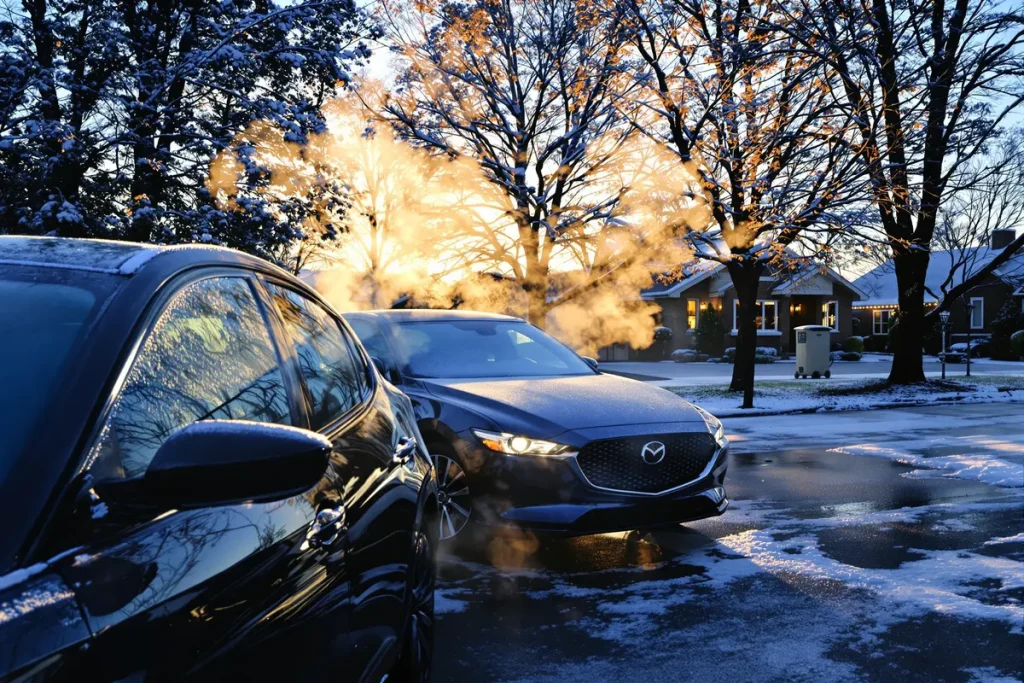
Every winter morning, millions of drivers follow the same routine: start the car, let it run for 10–15 minutes, and wait for it to warm up. It feels right. It feels smart. But what if that comforting ritual actually damages your engine — a little more, every single day?
Why long cold-start idling harms your engine
On freezing mornings, your engine isn’t ready to run smoothly. The oil, which normally coats and protects engine parts, thickens in the cold. Instead of flowing easily, it moves slowly — like syrup.
During those first few minutes, your car runs with limited lubrication. That means metal parts rub against metal with less protection. This friction causes small scratches, or micro-abrasions, deep inside your engine.
That’s not all. Cold engines run in what experts call “open loop” mode. The system pumps in extra fuel to help the engine stay alive. But this extra rich mix can wash down cylinder walls, wearing away helpful oil and creating carbon build-up over time.
It’s not just about comfort — it’s costing you more
Letting your car idle for long periods in the driveway wastes fuel. You’re burning gas without moving an inch. That habit adds to pollution, raises your monthly fuel bill, and contributes to long-term engine wear.
Many drivers wait indoors, hoping the engine warms up their car. But while the dashboard temp gauge creeps upward, inside the engine, damage may silently continue. Over time, this can lead to:
- Increased oil consumption
- Rough idling or strange engine noises
- Lower fuel efficiency
- Expensive repairs sooner than expected
Winter doesn’t just wear down your patience. It slowly wears down your engine — unless you change how you start your drive.
The smart way to start your car on freezing mornings
Modern mechanics suggest a different approach. It might feel backwards, but it’s better for your vehicle.
- Start your car and let it idle for 30 to 60 seconds
- Clear your windows using a scraper, not just the defroster
- Drive gently — stay at low speeds and low RPM for the first 5–10 minutes
- Avoid hard acceleration until the engine is fully warm
- Always use the correct winter-grade oil recommended in your owner’s manual
Why does this work? Because driving warms your engine faster than idling. As it heats up, oil thins and flows easily, covering all the moving parts. Less unburned fuel escapes, and the engine hits its peak performance temperature sooner. That’s when your car truly runs smoothly.
Still using remote start? Use it wisely
Remote start systems are convenient — especially on icy mornings. But they shouldn’t be a crutch. If you must use it, limit how long your car idles. Try stepping outside within a minute and begin gentle driving as soon as possible.
You’ll still enjoy some cabin warmth, but without sacrificing engine health.
Changing the habit: it’s easier than you think
This isn’t about being perfect. Everyone has mornings when they remote-start from the bedroom and hope for the best. But if you treat that as the exception instead of the rule, your engine will feel the difference — now and years from now.
Long idling once or twice won’t destroy a modern vehicle. But building that into your daily winter routine is like sanding the same spot of wood each day. Over time, it wears through.
Mechanics agree: changing your approach today can extend your vehicle’s life, improve performance, and reduce fuel costs — all without buying a thing. Just smarter choices, right from the driveway.
Quick FAQ on cold starts and engine health
- Should I ever let my car idle to warm up?
Yes, but keep it short — 30 to 60 seconds is enough to stabilize the engine before driving gently. - What about modern cars with remote start?
They’re designed to handle cold starts better, but the same rules apply: keep idle time short, and don’t rely on it daily. - Do hybrids or EVs need warm-up time?
Not in the same way. Electric motors don’t have cold-start engine wear, though battery performance can drop in the cold. - Can I undo past damage by changing now?
Yes — cutting down idle time helps reduce future wear and keeps your engine healthier going forward.
Winter may be tough, but your engine doesn’t have to suffer
Cold starts are unavoidable. But long idle sessions don’t have to be. By adjusting how you treat your car in those first few minutes of the day, you’re not just preserving your engine — you’re investing in the long life of your vehicle.
The fix is free. The benefits are real. And the peace of mind? That’s yours to keep — all winter long.