Drying clothes indoors can feel like a never-ending task, especially when you’re battling cold, rainy, or humid weather. But here’s the tricky part—if you do it wrong, you risk filling your home with excess moisture, which leads to mold, damp smells, and even health problems. So how do you dry your laundry quickly, safely, and without creating a damp disaster? You’re about to find out.
Why drying indoors causes damp in the first place
Before fixing the problem, it helps to understand why it happens. When you hang wet clothes inside, they’re constantly releasing water vapor into the air. If there’s not enough ventilation, that moisture settles on walls, windows, and ceilings. Over time, this leads to condensation, mold growth, and unpleasant odors.
The good news? With a few smart tricks, you can dry your laundry faster and keep your home dry and fresh at the same time.
1. Spin your laundry properly before drying
This may sound basic, but it’s step one in drying efficiently. After washing, make sure you’re using the machine’s highest spin setting that’s safe for your fabric. The more water you extract beforehand, the less moisture enters your home.
For example:
- Regular cycle: Leaves clothes at about 60% moisture
- High spin (1200–1400 RPM): Drops that down to 40% or even less
That difference can cut drying time by hours.
2. Use a clothes airer—strategically
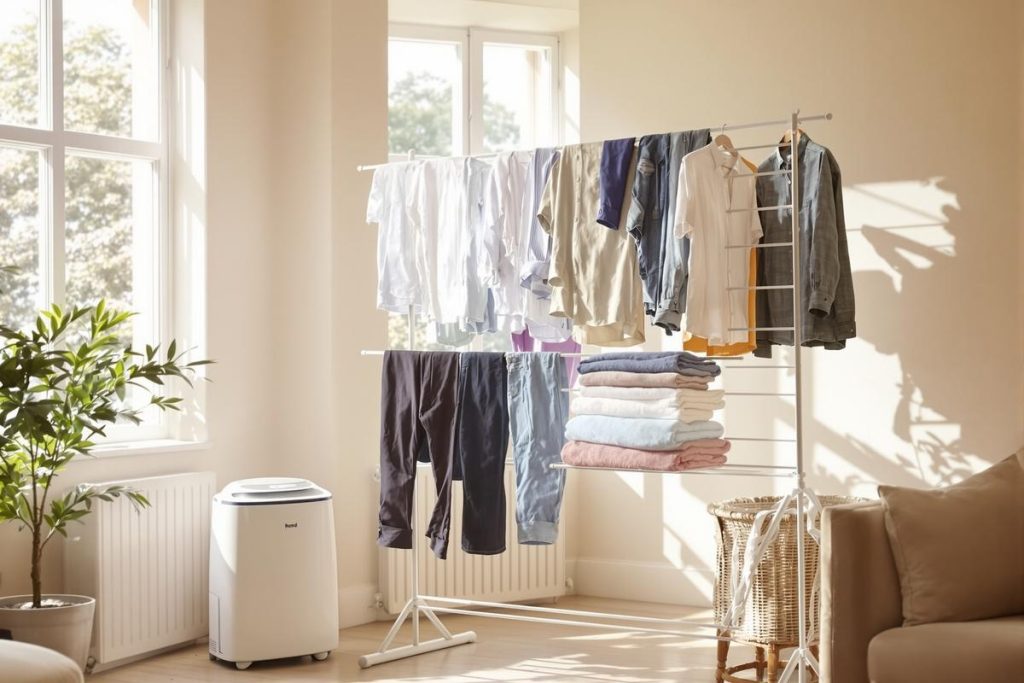
Not all drying racks are created equal. Use a wide, tiered airer that allows airflow between garments. Set it up in a warm, dry room, away from walls and corners.
Better yet, place it near a radiator or sunny window, but make sure nothing is touching the heat source—it’s about warmth, not direct contact.
3. Place a dehumidifier nearby
This is one of the most effective tricks. A dehumidifier pulls moisture from the air, helping clothes dry faster and preventing that sticky, damp feeling in the room.
Here’s how to do it right:
- Place the airer and dehumidifier in the same room
- Close the door to trap warm air
- Empty the water tank daily if needed
Some dehumidifiers even have a “laundry mode” that speeds things up.
4. Maximize airflow with fans
If you don’t have a dehumidifier, a fan can still help. Position a regular oscillating fan pointed at your clothes to keep air moving. Add an open window if the outside air is dry.
Circulating air plays a big role in evaporating moisture. Think of it like drying your hands using air instead of heat.
5. Don’t overload your drying space
More clothes packed into a space doesn’t mean they’ll dry faster—quite the opposite. A crowded rack traps moisture and slows everything down. Hang fewer items at a time and give each piece breathing room.
Tip: Heavy items like towels or jeans can go on their own small rack or be saved for a different load.
6. Use heated airers or towels rails when possible
Heated airers are electric racks that warm up to gently dry clothes. They’re safer and cheaper to run than tumble dryers and far more efficient than hanging clothes in cold air.
Don’t have one? A heated towel rail in the bathroom works well for smaller loads or delicate items.
7. Flip and rotate clothes halfway through
After a few hours, turn your clothes over to help both sides dry evenly. Sleeves, hems, and thicker seams hold more water, so lifting and flipping can speed things up.
If something feels dry on the outside but damp near the seams, it needs more time or turning.
8. Avoid drying in bedrooms or poorly ventilated spaces
It may be tempting to throw clothes on a chair in your room, but don’t. Bedrooms are usually closed for most of the day and lack proper airflow. That leads to condensation on windows and musty smells.
Stick to kitchens, bathrooms with fans, or living areas with good ventilation for the best results.
9. Try quick dry tricks for emergencies
Need dry clothes fast? You can try:
- Blow-drying small areas like hems or cuffs
- Ironing with a towel on top to soak moisture out
- Tumble drying for 10 minutes before air-drying to kickstart the process (if safe for the fabric)
Use these sparingly—they’re not meant for whole loads, but they work wonders when you’re in a rush.
Keep your home dry while tackling laundry
You don’t have to choose between dry clothes and a healthy home. By spinning clothes well, allowing air to circulate, and using tools like dehumidifiers or heated airers, you can stay ahead of damp while keeping laundry under control.
Remember: the key is consistency. Even a few simple tweaks to your drying routine can make a big difference. Try them today and see how much faster—and fresher—your laundry feels indoors.