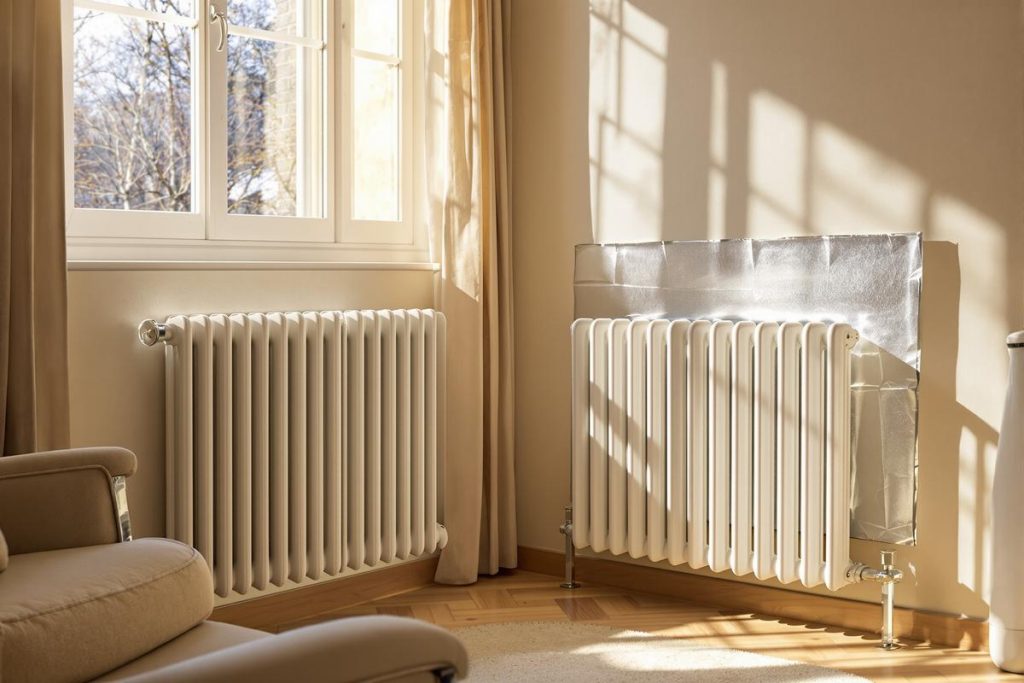
Looking to save money on your heating bill without major upgrades or expensive gadgets? There’s a surprisingly simple tip that can make your radiator work better—right away. It costs next to nothing, takes just a few minutes, and can make your whole room feel warmer faster.
Why radiator efficiency matters
When your radiator isn’t working efficiently, you’re wasting heat—and money. You might crank the thermostat, but much of the warmth escapes or disappears into walls. So the radiator keeps pumping out heat, but your room still feels chilly.
Your heating system ends up doing double duty. That’s tough on both your budget and the planet.
The tip: use radiator reflector panels
Here’s the trick: install a radiator reflector panel behind each radiator. These can improve efficiency by up to 20% in some homes. And yes, the difference is almost immediate.
So what are they? Radiator reflectors are thin sheets—usually foil or foil-covered insulation—that reflect heat back into the room. Without them, a lot of that warmth just seeps into the cold wall behind the radiator.
How to do it (it’s easier than you think)
You don’t need a pro. In fact, you can do it in under 30 minutes with simple tools.
Here’s what you’ll need:
- Radiator reflector panels or foil insulation (available at hardware stores or online)
- Scissors or a utility knife
- Double-sided tape or adhesive strips
- Measuring tape
Steps:
- Turn off your radiator and let it cool.
- Measure the width and height of the radiator. Trim the reflector to fit behind it.
- Attach the reflective panel to the wall, behind the radiator, using the tape or sticky tabs.
- Make sure it covers as much surface as possible and sits close to the back of the radiator.
That’s it. Once you turn the radiator back on, you’ll likely notice the room warming up more quickly—and staying warmer longer.
Why this works so well
Radiators give off two kinds of heat: radiant and convective. The radiant heat often gets absorbed by the cold wall behind the radiator. But a reflector panel bounces that warmth back into the air and toward YOU—where it belongs.
It’s basic physics, but the real-life impact is big. You’ll reduce the effort your heating system needs to maintain temperature, which lowers your energy use.
DIY vs. store-bought: what’s the difference?
You can buy pre-cut panels made from insulated reflective foam or metalized film. These usually cost about $10 to $25 per radiator depending on size and brand.
Want to save even more? Try a quick DIY option. Use regular kitchen aluminum foil and mount it to a sheet of thin cardboard or foam. It’s not as durable, but it works in the short term—especially in smaller rooms or apartments.
Other bonus tips to boost radiator performance
While you’re tweaking your setup, here are a few more quick fixes:
- Don’t block radiators with furniture. It traps the heat and stops it from reaching the rest of the room.
- Bleed your radiators regularly. Trapped air keeps hot water from circulating evenly.
- Use radiator shelves above (not in front of). These can help direct the heat outward into the room instead of up into the ceiling.
- Add thermostatic radiator valves (TRVs). These allow for room-by-room heat control and prevent overheating in seldom-used spaces.
The bottom line
This small tweak—adding radiator reflectors—can genuinely improve your heating efficiency without a fuss. It’s one of those little-known tricks that experts swear by but most people overlook. And the best part? You won’t need to wait weeks to feel the difference. Just a few minutes of effort, and you’ll enjoy a cozier home sooner than you think.