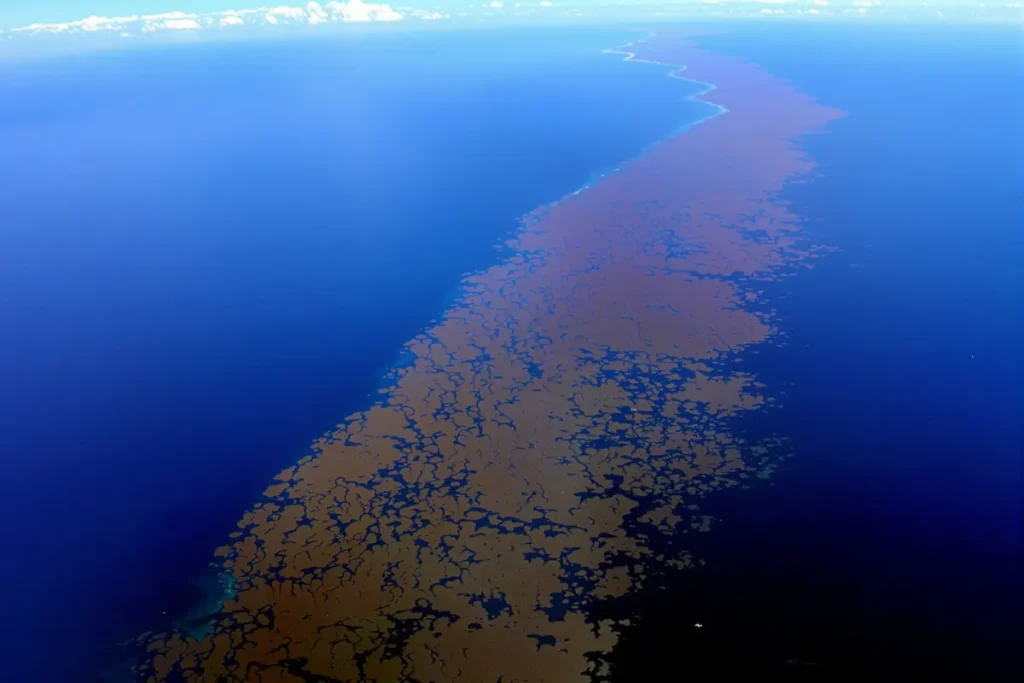
The Atlantic Ocean is waving a warning flag—and it’s not red, it’s a sprawling brown ribbon that’s quietly spreading across thousands of kilometers. From the sky, it looks like a giant paint smear on the deep blue ocean. But for the people who live and work along the coastlines, it’s much more than a strange sight. It’s a sign that something’s seriously wrong.
What is the brown ribbon seen across the Atlantic?
This long brown streak seen from space is made of sargassum—a type of brown seaweed that floats naturally on the ocean surface. In small amounts, sargassum is part of a healthy marine environment. It provides a home for fish, turtles, and tiny creatures.
But what’s happening now isn’t natural. This floating forest has grown into the Great Atlantic Sargassum Belt, stretching more than 8,000 kilometers from West Africa to the Caribbean. It’s like the ocean is wearing a bruise—and that bruise just keeps widening.
Why is sargassum suddenly everywhere?
Scientists have traced the rapid growth of sargassum to a mix of human actions and climate changes. Here’s how it adds up:
- Nutrient-rich runoff: Rivers like the Amazon, Congo, and Mississippi carry large amounts of fertilizer and waste into the ocean.
- Warming oceans: Warmer water acts like a greenhouse, helping sargassum grow faster and live longer.
- Shifting currents: Changes in ocean patterns help spread the seaweed farther and wider than ever before.
We’re basically fertilizing the ocean—on a global scale—and the ocean is responding with this overwhelming bloom.
How is this affecting local communities?
When huge mats of sargassum reach the shore, they cause major problems:
- Health issues: As sargassum rots, it releases gases like hydrogen sulfide. That “rotten egg” smell isn’t just unpleasant. It can irritate eyes, trigger headaches, and make breathing difficult, especially for kids or people with asthma.
- Tourism loss: Visitors often avoid beaches covered in seaweed. In places like Cape Verde and Mexico’s Caribbean coast, tourism jobs have taken a hit.
- Fishing challenges: Boats get stuck in thick patches. Nets come back full of smelly, useless seaweed instead of fish.
- Cleanup costs: Governments are spending millions each year just to remove seaweed piles from beaches. That’s money that could be used for schools, hospitals, or coastal defense.
In Ghana and across the Caribbean, some communities have been forced to change how they live and work. What felt like a rare nuisance a few years ago is now a growing, yearly burden.
Is there any positive side to sargassum?
Oddly, yes—but only when handled correctly and away from the shore. Sargassum at sea creates valuable marine habitats. Once it washes up and decays, though, that benefit disappears fast.
That said, people are finding ways to turn this problem into opportunity:
- Some companies use dried sargassum to make fertilizer, bricks, or even bioplastics.
- Early-warning systems based on satellite data help islands prepare before seaweed hits their shores.
- Floating barriers are being tested at ports to stop sargassum before it enters sensitive zones.
- Teams are trying to collect sargassum at sea, before it decays and becomes toxic on land.
These solutions aren’t perfect. But they offer a path forward—one based on coordination, planning, and science, not surprise and panic.
Can we make a difference?
It’s easy to feel powerless when the issue floats between continents. But small actions do matter. Here’s how everyday choices can feed or fight the sargassum spread:
- Support eco-friendly tourism: Choose hotels and tour operators that invest in safe cleanup practices.
- Follow local health advice when visiting beaches with sargassum, especially for kids and anyone with breathing problems.
- Back efforts to reuse seaweed: Look for brands or products using recycled sargassum materials.
- Stay informed: Follow science-based updates—not just dramatic social media posts—about ocean health.
- Consider your consumption habits: Nutrient runoff starts with what we buy, eat, and throw away.
The ribbon is a reflection—of us
This isn’t a one-off event or a weird natural trick. Satellite records show that since 2011, the Atlantic’s brown ribbon has come back again and again. And it’s evolving into a new normal for many tropical coasts.
Think of it this way: the sargassum belt is like a billboard over the sea. It’s sending out a message about climate change, pollution, and how land-based actions ripple across the globe. It’s not just a floating mess—it’s a mirror to our habits and our impact.
In the end, the real question isn’t “How do we clean this up more easily?” It’s “How do we stop writing this brown line in the first place?” The longer we wait, the longer the ribbon becomes—and the harder it is to untangle.